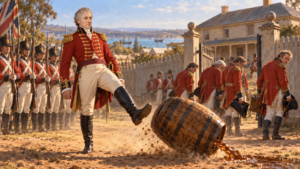
 Colonel Lachlan Macquarie was no stranger to a lively celebration, but when he stepped into the chaos of Sydney in January 1810 as Governor of New South Wales, he quickly discovered that the Colony was steeped in corruption beyond comparison. In fact, it made Dodge City seem like a child's playground. This stark reality set the stage for a transformative leadership journey that would challenge the very foundation of the colony and reshape its future
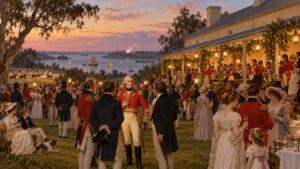
He cleaned out the rot by sending the Rum Corps back to England and tidied up the administration. He was soon able to say that the Colony was thriving and in a “perfect state of tranquility.” It was time for a party. So on June 4, 1810, Macquarie celebrated the King’s birthday with a party on the lawn in front of Government House. He had the front of the building decorated and the band of the 73rd provide entertainment. The inhabitants of Sydney gazed in astonishment.
In October 1810, Governor Lachlan Macquarie made a significant announcement by officially proclaiming Sydney's Hyde Park as a public space. Inspired by the lush and iconic green landscapes of London, he envisioned this park as a place for the community to gather and enjoy nature. To further encourage social interaction and strengthen the bonds among the 3,000 early settlers, Governor Macquarie also sanctioned the colony's first-ever three-day horse racing carnival, which took place in October alongside the park's proclamation.
 This exciting event was meticulously organized by the officers of the 73rd Regiment, who infused it with their military precision and enthusiasm, creating an atmosphere charged with energy and anticipation. The carnival featured thrilling races that captivated the local population, providing not just entertainment, but also an opportunity for families and friends to come together in celebration.
Governor Macquarie was a firm believer in the power of public festivities and recreational activities to build a sense of belonging and camaraderie among residents. He recognized that such events were essential for cultivating a vibrant community, and he hoped that they would foster social cohesion and unity in the burgeoning colony. Through these celebrations, the early settlers began to form connections, building a richer and more dynamic society in their new home.
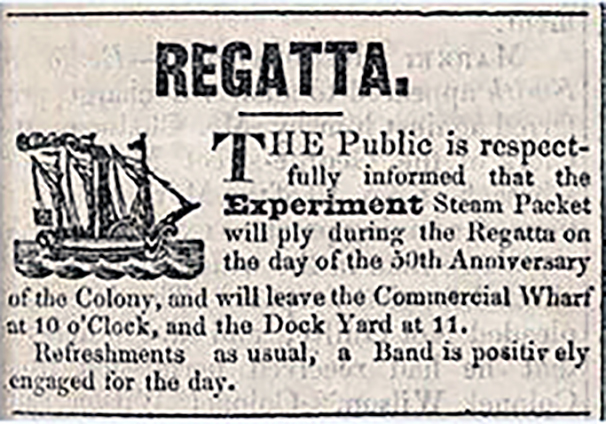 On January 26, 1818, the 30th anniversary of the First Fleet arriving in Sydney Cove, Brigadier-General Lachlan Macquarie decided it was another splendid opportunity for a celebration. He declared that the day would be a holidayfor all government workers and they could have an extra allowance of one pound of fresh meat. There was to be a 30 gun salute from Dawes Point and a regatta on Sydney Harbour. The advertisement in the Sydney Gazette read, “The public is respectfully informed that the Experiment Steam Packet will ply during the Regatta on the day of the 30th Anniversary of the Colony.”
The Sydney Gazette, on January 31, reported that the Governor had inspected the troops of the 48th Regiment, held a dinner for all the civil and military officers and was pleased to pay a tribute to the late Admiral Arthur Phillip. Later that evening, Mrs. Macquarie hosted a ball which ran on into the early hours of the night. Mr. Francis Greenway was pleased to be able to decorate the hall in honour of his late friend, Vice Admiral Phillip and to have written on one of the banners the words “In Commemoration of the 30th Anniversary of the Colony of New South Wales, established by ARTHUR PHILLIP, whose virtues and talents entitle him to the grateful remembrance of his Country, and to whose arduous exertions the present prosperous state of the Colony may chiefly be ascribed.” [Sydney Gazette 31 January 1818 pp.2b-2c]
This celebration came to be known as ‘Foundation Day’. It was a commemoration of the arrival of the First Fleet in Sydney Cove, yet, the real ‘foundation day’ was 12 days later on February 7, when all were assembled, the King’s Letters Patent were read and a formal declaration of Britain's acquisition of New South Wales proclaimed. It was not until 1935 that all Australian States and Territories adopted use of the term ‘Australia Day’. By coincidence, the Nationality and Citizenship Act of 1948 came into effect on January 26, 1949 – whereby January 26 became ‘Australians Day’. From this date, it was possible to become an Australian citizen. Before that, we were British subjects. Everybody who is born in Australia since 1949, regardless of racial heritage, is automatically an Australian citizen. Of course, it is possible for people born in ‘foreign’ countries to apply and take up citizenship.
However, it was not until 1994, under the Keating Government, that Australia Day of January 26, became a national holiday.
But here is the rub. If our national day is a celebration of when we became an
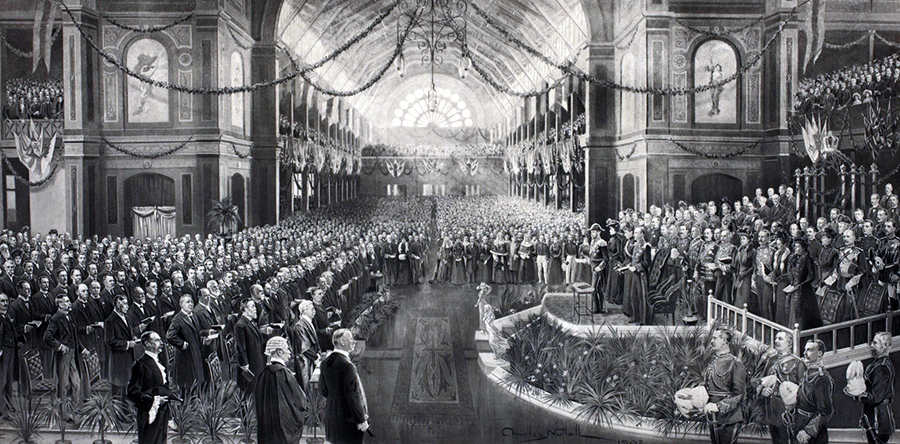
Australian nation, as it rightly should be, than the date should be taken from January 1, 1901 on the occasion when Governor General, Lord Hopetoun, proclaimed the inauguration of the Commonwealth of Australia. On this date, we the people of Australia became a nation. We the people of this land became ‘Australians’.
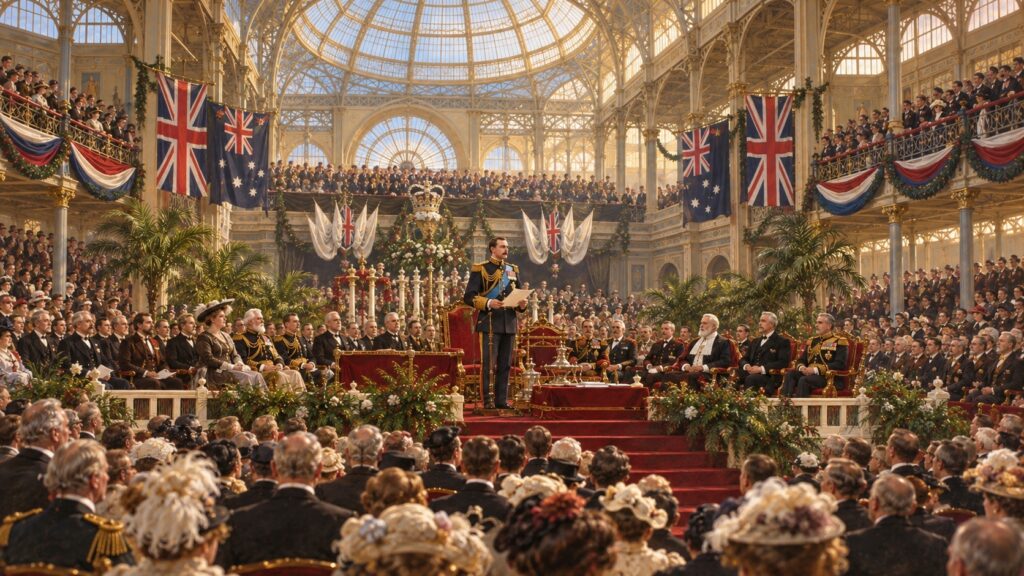 Still, it doesn’t really matter if we celebrate Australia Day on January 1st each year or January 26. It is our special national day when ‘we the people’ of Australia celebrate becoming a nation.
There are those, however, who promote an anarchist agenda or even hate our nation. They would have us deny our heritage and our right to be citizens of this great nation. Sir Robert Menzies in a speech entitled “Kingship and Kinship” given in the City of London in 1948 said “We cannot hack away from the foundations (of our country) and then express surprise when someday the house falls”. Yes, a house divided will fall. A nation that celebrates its identity, as Macquarie believed, brings social cohesion, and, the desire to create its future.
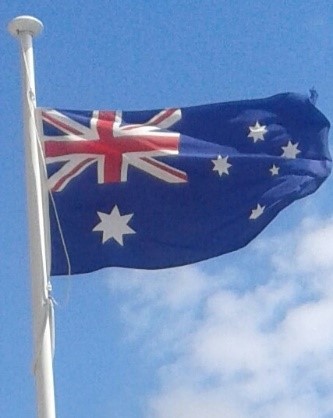
Australia Day is ‘our’ day. We the people of Australia are proud to be a free and democratic nation in this fantastic country. We will defend our right to have our national day and we WILL celebrate it.
Dr. Christopher Reynolds is the author of What a Capital Idea – Australia 1770-1901. www.reynoldlearning.com